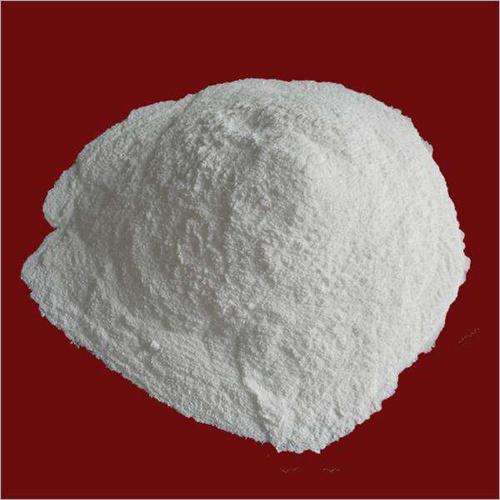
About Chlorinated Polyethylene
Physicochemical Properties
| Item | Unit | Index |
| Chlorine Content | % | 35 1 |
| Thermal Decomposition Temperature |
| 165 |
| Bulk Density | g/ml | 0.5 |
| Volatiles content | % | 0.3 |
| Particle size | % | 99 |
| Impurity Particle | PC/50g | 10 |
| Shore Hardness |
| 70 |
| Tensile Strength | MPa | 13 |
| Elongation at break | % | 700 |
| Calcium content | % | 5 |
Exceptional Performance in Demanding ApplicationsChlorinated Polyethylene stands out for its superior mechanical properties such as high elongation and tensile strength, ensuring durability in various environments. Excellent heat and weather resistance make it ideal for manufacturing products that require a long service life, including electrical insulation and flexible hoses.
Wide Range of Industrial UsesThis grade of CPE is widely employed as an impact modifier, flame retardant base, and in waterproofing applications. Its compatibility with different polymers enhances product formulation in wire and cable jacketing, tubing and rubber goods manufacturing.
Safe, Stable, and Reliable MaterialCPE is non-poisonous and odorless, providing a safe option for environments where user exposure may occur. Its chemical and thermal stability ensures reliable performance, while being insoluble in water and resistant to oil and weather promotes longevity of finished products.
FAQs of Chlorinated Polyethylene:
Q: How is chlorinated polyethylene (CPE) typically used in the plastic and rubber industries?
A: Chlorinated polyethylene is commonly utilized as an impact modifier, a component in wire and cable jacketing, hose and tubing, waterproof membranes, flame retardant materials, and rubber products because of its excellent heat and weather resistance, flexibility, and strength.
Q: What are the key benefits of choosing CPE with 3540% chlorine content?
A: Selecting CPE with 3540% chlorine content offers enhanced heat stability, superior weather resistance, and good oil resistance, making it suitable for demanding industrial applications where durability and resilience are critical.
Q: Where should Chlorinated Polyethylene be stored for optimal shelf life?
A: CPE should be stored in a cool, dry place. Proper storage helps maintain its quality and extends its shelf life to up to 2 years, preventing moisture absorption and contamination.
Q: What is the recommended process for handling and packaging CPE?
A: CPE is typically provided in 25 kg bags for easy handling and transportation. When using the material, it should be processed in well-ventilated environments and handled with appropriate protective measures to avoid dust exposure.
Q: When is CPE preferable over other polymers in manufacturing?
A: CPE is preferred when high elongation, tensile strength, excellent weather and oil resistance, or flame retardant properties are needed in the final product, such as in wire jacketing, hoses, membranes, and impact-resistant materials.
Q: How does CPE improve the properties of wire and cable jacketing?
A: CPE enhances wire and cable jacketing by providing excellent insulation, flexibility, and resistance to heat, oils, and weather, ensuring reliable performance and prolonged product lifespan in challenging environments.
Q: What does the excellent thermal decomposition temperature mean for CPE applications?
A: With a thermal decomposition temperature of 160170C, CPE can withstand substantial process heat, enabling it to be used in high-temperature manufacturing while maintaining its structural integrity and performance.


 Get a Quote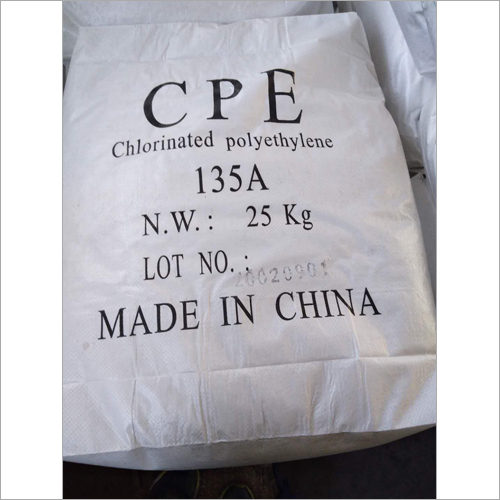

 Send Inquiry



 Send Inquiry
 Send Inquiry
 English
 Spanish
 French
 German
 Italian
 Chinese (Simplified)
 Japanese
 Korean
 Arabic
 Portuguese